The lost art of attention
Why attention fragments in modern life, what the mind actually needs, and small practices that return clarity.

In today's world, attention has become our most fragile resource. There is a perpetual draining of our attention throughout the day. This is not because we spend too much time on screens but because our senses are constantly being pulled outward.
Our day is rife with notifications, conversations, noise, lights, tasks, and the list goes on. Even the subtle hum of "what's next?" keeps the mind from landing in one place.
In Āyurveda, this is called ati-yoga of the senses — the overuse and overstimulation of our sensory organs. When a sense is overused, the mind becomes fragmented and depleted. This is why we feel scattered even when we're not especially busy. Why small tasks feel overwhelming. Why simple decisions feel heavy.
It isn't a personality trait. It's the nature of a mind that receives too much and digests too little.
The mind needs space
The mind thrives when there is space. Pauses between thoughts. Moments between tasks. Silence between actions.
When the senses push outward without rest, the mind loses its capacity to process, integrate, reflect, nourish itself. Attention scatters. Discrimination weakens. Clarity fades. Unnecessary stress rises, because there is no inner ground from which to choose.
Stillness is not laziness. Stillness is nourishment. Stillness is how the mind breathes.
Why āsana, prāṇāyāma, and meditation actually work
Not because they empty the mind. The mind cannot stop thinking — thought is to the mind what heat is to fire.
What these practices do is quieter:
- Reduce the number of thoughts
- Lengthen the space between them
- Slow the speed at which they move
- Turn the senses inward instead of outward
The shift isn't dramatic. It's a softening of the pace at which the mind runs.
The crowded mind
Most of us move from one stimulation to the next. Message to email. Conversation to podcast. Task to news. Thought to more thoughts.
The mind starts to feel like a bazaar — loud, crowded, restless. In that state, creativity collapses, attention shortens, and the ability to simply be with ourselves thins out.
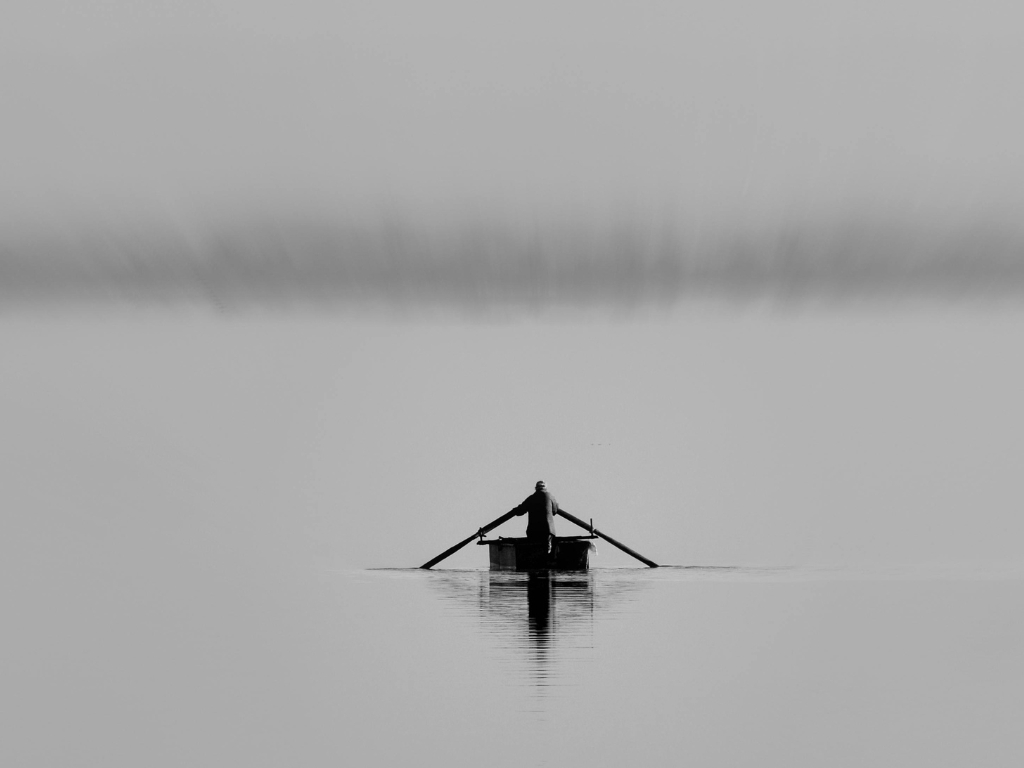
Creativity needs empty space
Think of your mind as a fertile field. Creativity is the seed. Space is the air and light. Silence is the soil.
If you look back, you'll notice that the fresh ideas — the ones that actually moved something — rarely arrived in the middle of noise.
They arrived in the shower. On a walk. During yoga. Staring out a window. Sipping tea. In the quiet moment before sleep.
Never in the middle of stimulation.

Small ways to begin
Nothing here is dramatic. Each one gives the senses a moment to rest.
One sense at a time. Eat without screens. Walk without headphones. Shower without music. A single activity with one sense engaged can soften mental overstimulation quickly.
Micro-pauses. Every hour, close your eyes for thirty seconds. It interrupts sensory overload and gives the mind a moment to inhale.
Watch the mind, not the phone. When you feel the urge to reach for the device, pause and ask: what am I trying not to feel right now?
Enter boredom on purpose. Boredom isn't the enemy. It's often the doorway into clarity. Let yourself be bored sometimes; the mind will reset on its own.
Make silence a friend. Five minutes a day is enough to begin. No reading, no listening. Just silence.
A closing thought
The mind isn't meant to be a battlefield of unending thought. Attention isn't meant to be torn into a thousand fragments.
When thoughts slow down, clarity emerges. When clarity emerges, creativity awakens. When creativity awakens, intuition becomes alive. When intuition is alive, life moves with less effort.