The mind is not your Dosha
The three Doshas describe the body. The mind has its own framework (the Trigunas), and conflating the two quietly closes down the inquiry.

Here's what I often read in Āyurveda posts: why Pitta types struggle with rest; how to manage Vāta anxiety; why restlessness follows Vāta and Pitta types around.
These posts get a lot of likes and comments from people who finally feel understood. And I understand why. When you're exhausted, wired, and genuinely puzzled about why switching off feels so hard, being handed a tidy explanation is a relief. It's comforting.
But it's far from the complete picture that Āyurveda actually offers.
Using only the body's three Doshas to explain the mind's patterns is one of the most common misrepresentations in modern Āyurvedic content. I'm not being pedantic 🙂 but the misreading has real consequences for anyone genuinely trying to understand themselves. So let me unpack this for you.
A quick note on the word "Dosha"
Before we go further, it helps to understand what the word Dosha actually means, because the word itself is already telling you something important.
Dosha means to spoil, to pollute, to vitiate. Classical Āyurvedic commentators define it precisely: that which causes vitiation or corruption is called a Dosha.
So why name a fundamental life force after its capacity to cause harm? Because when the Doshas are in balance, they are the biological pillars of the body. It's their inherent tendency to go out of balance, and their power to disturb everything else when they do, that earns them the name.
The word is a reminder to pay attention.
Doshas are not fixed categories. They're dynamic forces, always in movement, always responding to what you eat, how you sleep, the season you're in, the pressure you're under.
(Want to go deeper on this? I've written a full piece on what Dosha actually means.)
What Prakriti actually is

Prakriti is your unique constitutional makeup at birth: the proportion of Vāta, Pitta, and Kapha that forms your physical, physiological baseline and certain psychological inclinations.
This proportion is established at the moment of conception and remains your foundational blueprint throughout life. It's not what an online quiz reveals in three minutes. It takes time, careful observation, and ideally the guidance of a qualified practitioner to understand accurately.
I've written more on this in my piece on Prakriti.
The mind has its own framework
Āyurveda and the broader Indic knowledge systems use a distinct, separate lens for understanding mental experience: the Trigunas (three qualities). Just as the Tridoshas (Vāta, Pitta, and Kapha) are the integral framework of the body, the Trigunas are the integral framework of the mind. They are not interchangeable.
The three Gunas are:
- Sattva: clarity, harmony, discernment, wisdom, compassion, knowledge.
- Rajas: movement, action, passion, stimulation, restlessness, desire.
- Tamas: inertia, heaviness, dullness, lethargy, confusion.
Now here's the distinction that matters most.
Rajas and Tamas are both Gunas (qualities) and, when aggravated, they become the Doshas of the mind. When in balance, they support mental functioning. When vitiated, they are the primary causes of mental disturbance, which in turn influences physical health.
Sattva is different. It is only ever a Guna, never a Dosha. It is the natural, balanced state of the mind: calm, clear, discerning.
Sattva without Rajas and Tamas cannot exist. We each have a natural tendency toward one of the Trigunas, but the aim is always to cultivate Sattva, not to eliminate Rajas and Tamas. It means having them in the right proportion: enough Rajas for action, motivation, and drive; enough Tamas for rest, stillness, and sleep; and Sattva as the ground that holds it all with clarity.
Doshas and Gunas, side by side
Here is where it gets genuinely interesting. The relationship between the Doshas and the Gunas is real, but it isn't a one-to-one mapping. Each Dosha has a natural Guna tendency arising from its elemental composition, and the two frameworks influence each other, but they remain distinct lenses.
- Vāta (ether and air) is a combination of Sattva and Rajas gunas, but is predominantly Rajasic.
- Pitta (fire and water) is a combination of Sattva, Rajas and Tamas but is predominantly Sattvic.*
- Kapha (water and earth) is a combination of Sattva, Rajas and Tamas but is predominantly Tamasic.
[* Even though this is a widely cited position in Āyurvedic literature, it is not universally agreed upon. Some argue that Pitta's intensity, transformative force, and competitive quality carry a strong Rājasic quality, and that Sattva represents Pitta's potential when balanced rather than its natural ground. It is worth noting, however, that classical texts indicate that no Dosha is inherently more Sāttvic, Rājasic, or Tāmasic than another and that the dominant Guna of the mind is a separate understanding from Prakṛiti. I have followed the inferential position in this piece because it serves as a useful bridge concept, but readers with a deeper interest will find the question genuinely open.]
This is where the "Vāta types are anxious" shorthand gets its grain of truth. A Vāta-dominant person has a natural Rajasic quality, so yes, there is an inclination toward restlessness.
But an inclination is not a sentence.
A Vāta, Pitta, or Kapha-dominant person can be Sattvic, Rajasic, or Tamasic in their mental constitution. A Vāta with Tamas dominance will experience brain fog, lack of motivation, lethargy, and a particular kind of heaviness that has nothing to do with being "wired" or anxious. Using the Dosha label alone to explain that experience doesn't just miss the point. It actively misleads the inquiry.
The identity trap

Once someone identifies strongly as "a Vāta" or "a Pitta," that label can quietly become a permission slip.
"I'm just like this because I'm Vāta-dominant." "I can't help being intense, I'm Pitta." "Of course I'm low-energy, I'm Kapha."
The problem isn't that these observations are entirely wrong. It's what they do to the inquiry. They close it down. They take something that's happening (a pattern, a tendency, an ongoing state) and reframe it as a fixed feature of the self.
That reframing is the end of understanding.
The Gunas in daily life
The Trigunas are not an abstract philosophical concept. They are observable in your daily choices, particularly in what you eat.
In Chapter 17, Verses 7 to 10, Krishna classifies food according to the three Gunas, not as a dietary rulebook, but as a map of how your inner constitution expresses itself and how it can be shaped. The teaching is direct: what you are drawn to eat reflects your dominant Guna, and in turn, what you eat reinforces it. It is a feedback loop, not a fixed identity.
- Sattvic foods (fresh, naturally sweet, juicy, nourishing, and light to digest) promote clarity, vitality, and steadiness of mind. Verse 17.8 describes them as foods that increase the duration of life, strength, health, happiness, and satisfaction.
- Rajasic foods (excessively bitter, sour, salty, hot, pungent, or stimulating) are preferred by those in whom Rajas is dominant. Verse 17.9 is precise: these foods cause pain, grief, and disease. Someone with dominant Rajas may find themselves naturally drawn to sharp, intense flavours, and this very preference, when habitual, can increase Rajas further, making them more prone to stress, irritability, anxiety, and physical symptoms such as inflammation or digestive discomfort.
- Tamasic foods (stale, processed, heavy, or lacking in life force) dull the mind and deepen inertia. Verse 17.10 describes them as food that has lost its original state, its taste, its vitality.
The point is not to create a rigid food rule.
Your preferences are data. They tell you something about your current mental state, and your current mental state is something you can actually work with.
Can your mental constitution change?
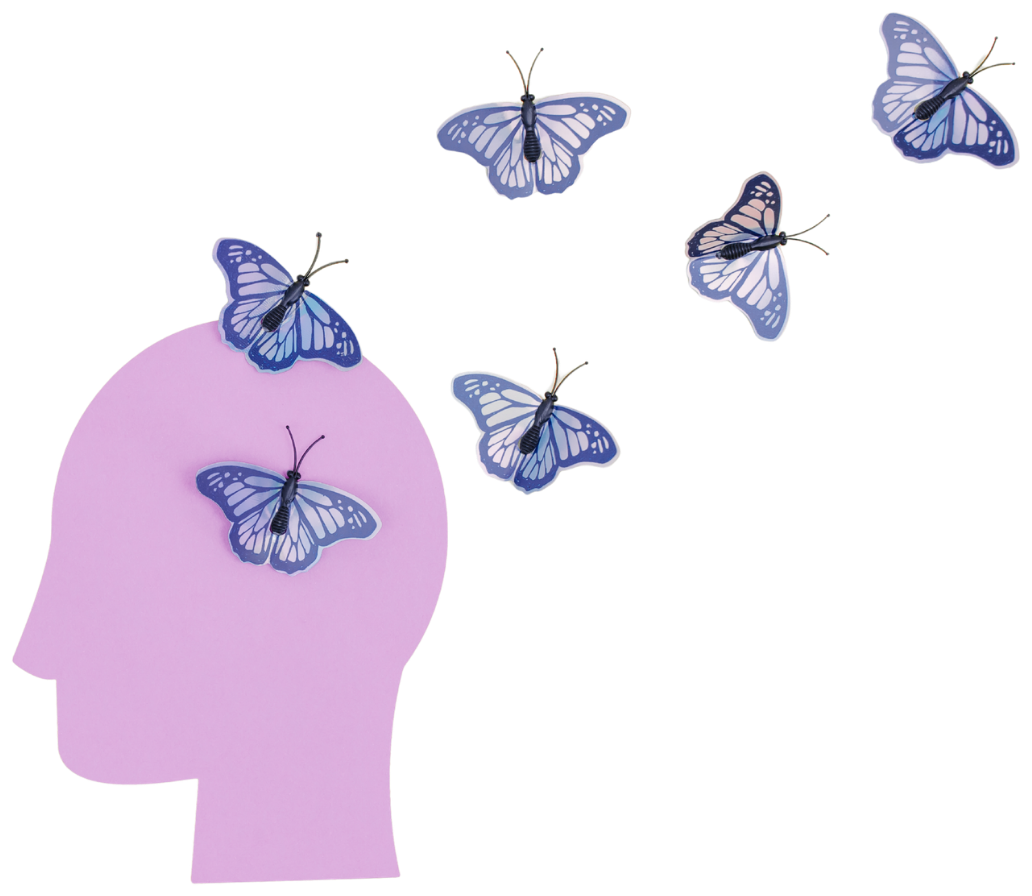
Yes. And this is perhaps the most empowering teaching in this entire framework. Āyurveda is clear that the mental constitution, shaped by the Gunas, is modifiable. Not through willpower or forced discipline, but through the right conditions.
The classical texts point to four areas through which the Gunas can be consciously worked with:
- Āhāra (diet): what you eat shapes your mental state, as the Gītā describes above.
- Vihāra (recreation and sleep): how you rest, move, and spend your non-working hours directly influences which Guna is dominant.
- Vyavahāra (behaviour): the patterns of how you engage with others, your habits of speech and action, reinforce particular Guna tendencies over time.
- Vichara (cognition): the quality of your thought, what you turn your attention towards and how you interpret experience, is itself a practice. Sattvic thought patterns cultivate Sattva.
These are not prescriptions. They are directions of inquiry: areas where small, consistent shifts in conditions create change in mental state over time.
This is why Āyurveda for the mind is not about doing more or trying harder. It's about understanding what conditions are maintaining your current state, and working with those.
A more precise question to sit with
If you want to understand your mental patterns, the Gunas are the more precise tool. Not instead of Prakriti, but alongside it, and often before it when the question is psychological.
The more useful questions are:
- Is my mind in a state of excessive Rajas right now: restless, busy, dispersed, irritable, overactive?
- Is there too much Tamas present: heaviness, withdrawal, difficulty engaging?
- What conditions are maintaining this state?
- What would more Sattva feel like, and what gets in the way of it?
The next time you reach for a Dosha label to explain something about your mind, I'd invite you to sit with these questions instead.
That's a very different relationship to yourself.
If this resonated and you're curious about what this kind of inquiry looks like in practice, an orientation call is a good place to start. Book here.
A note on the Sanskrit: I use a simplified spelling for readability. Long vowels are marked with a macron (so Vāta, Āyurveda, Gītā, Āhāra) because that small accent helps you hear the sound. The more technical scholarly markings (the dots under consonants in words like Doṣa, Guṇa, Prakṛti, Kṛṣṇa) are left aside in favour of the familiar transliterations Dosha, Guna, Prakriti, Krishna. The aim is a page that reads naturally, not one that performs scholarship.